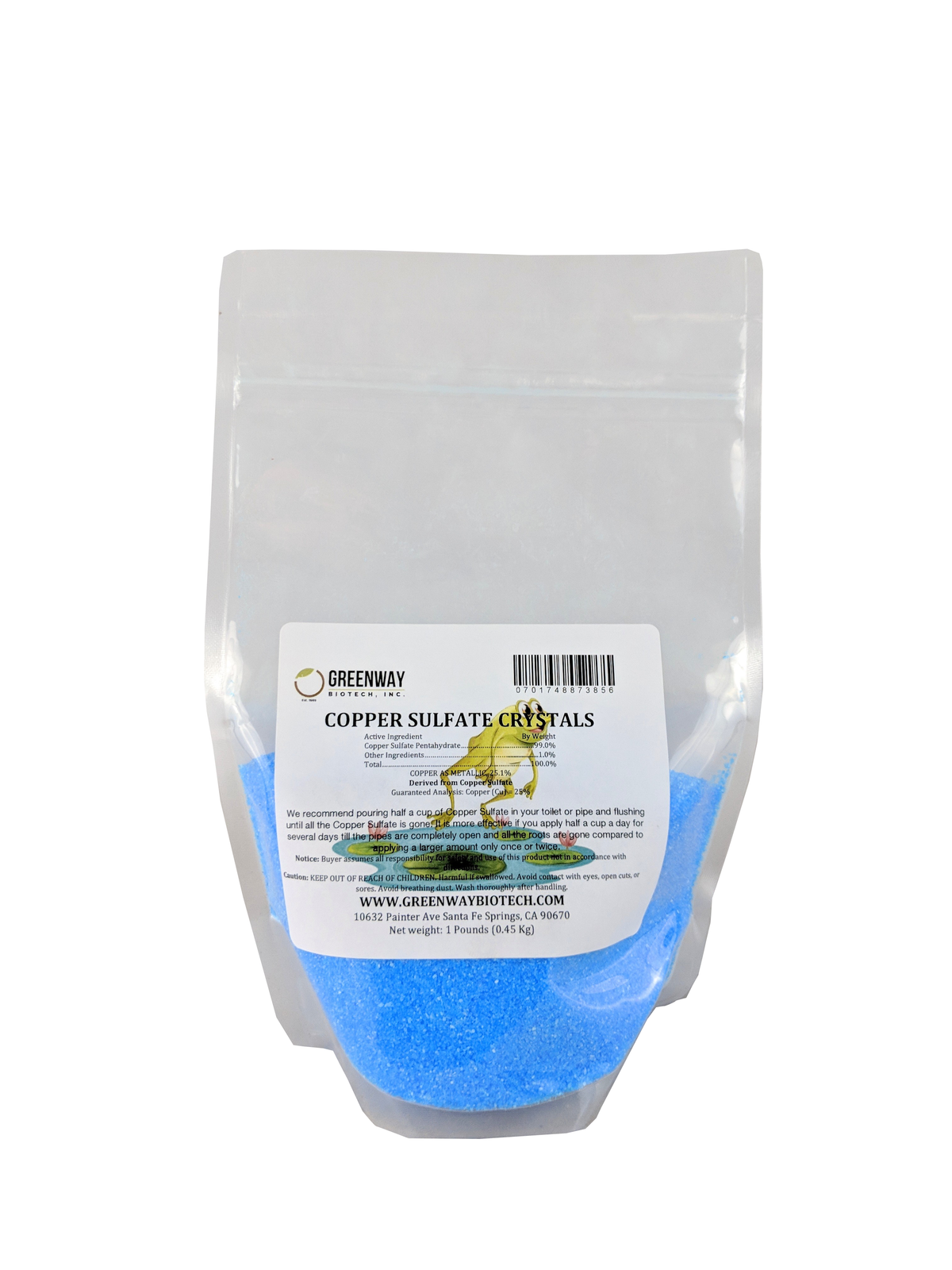
Copper Sulfate Fertilizer Crystals 25% Cu (99% Pentahydrate)
- Regular Price
- $ 21.99
- Sale Price
- $ 21.99
- Regular Price
- $ 21.99
Sold Out
- Unit Price
- per
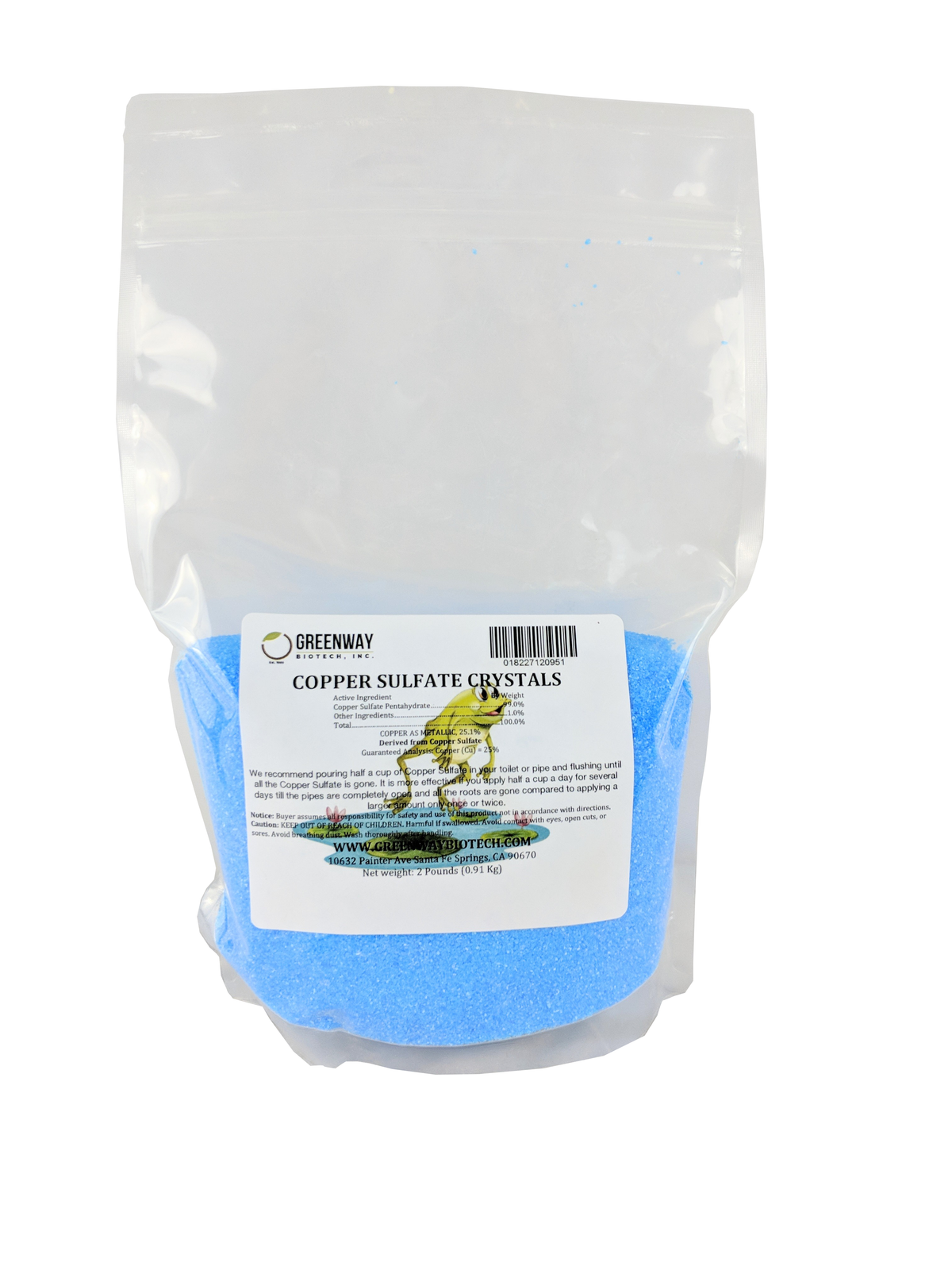
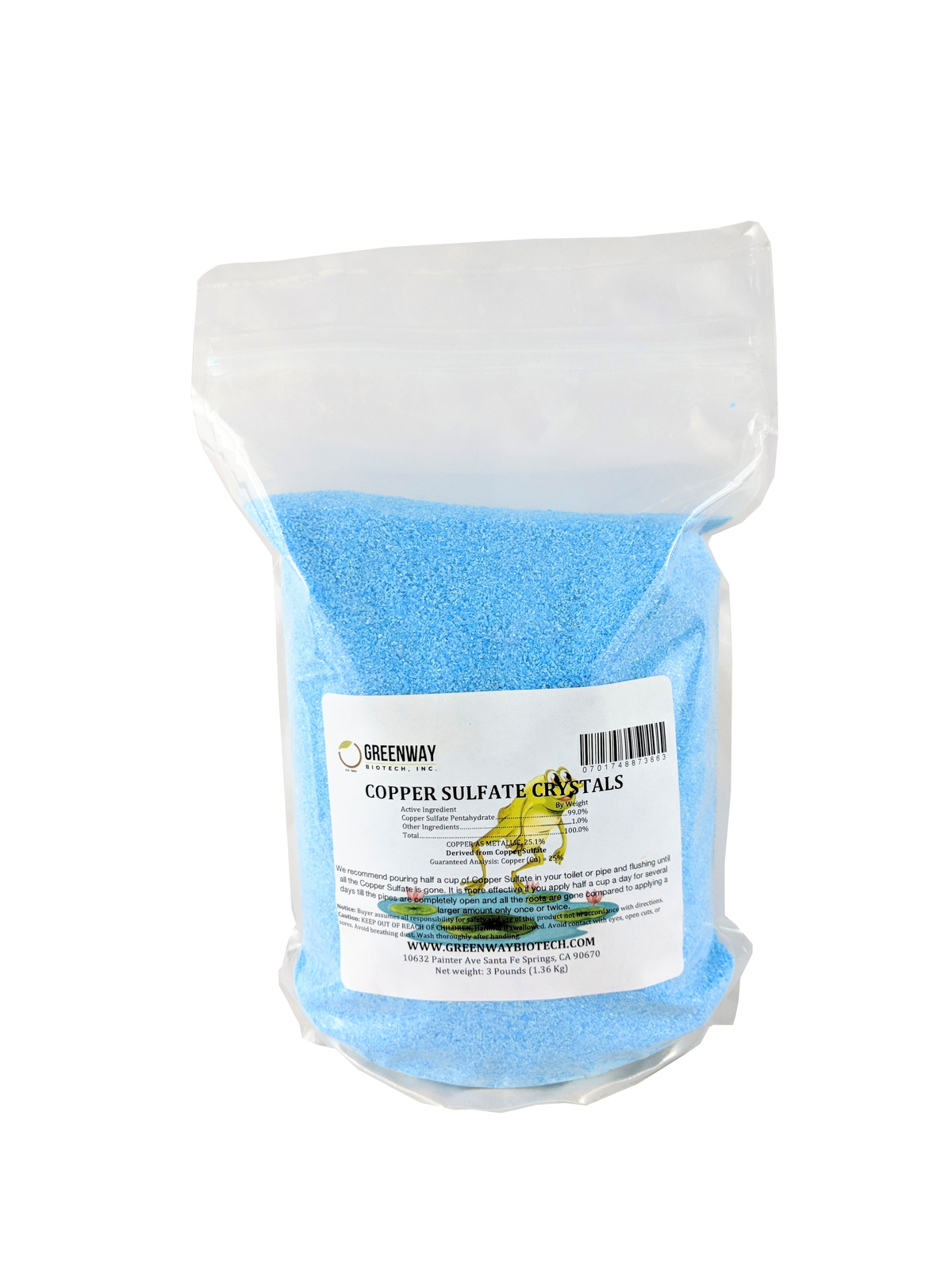
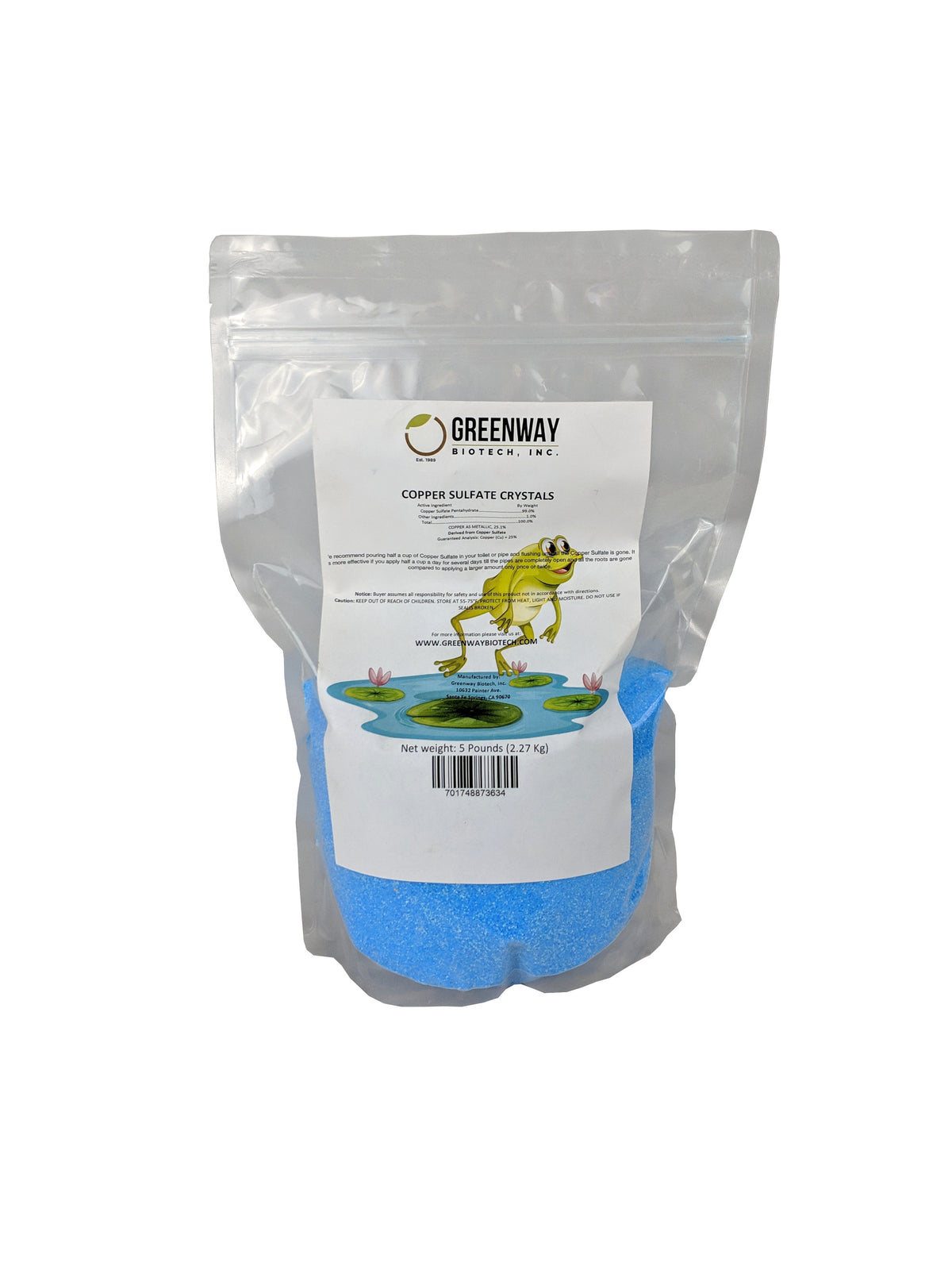
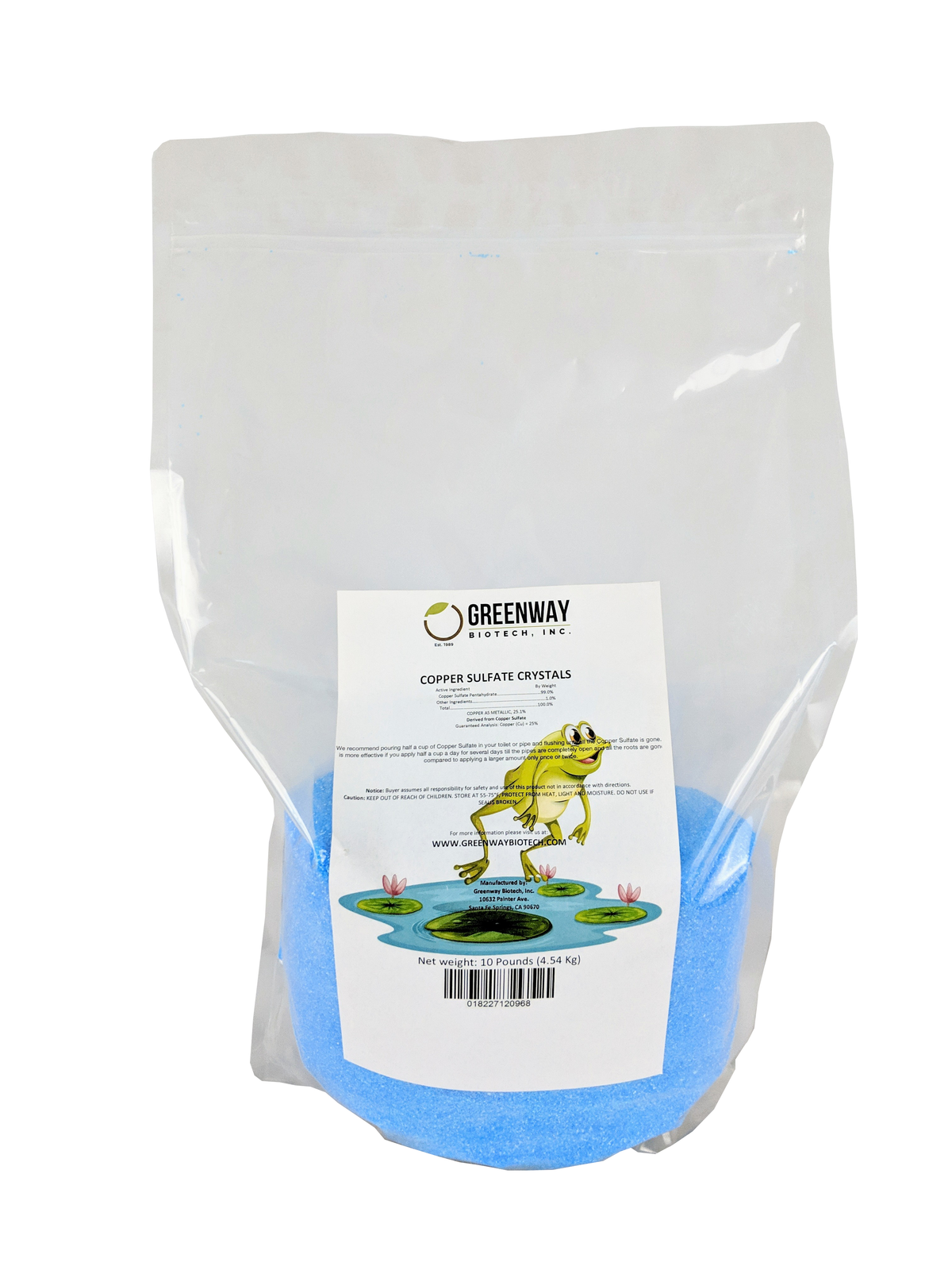
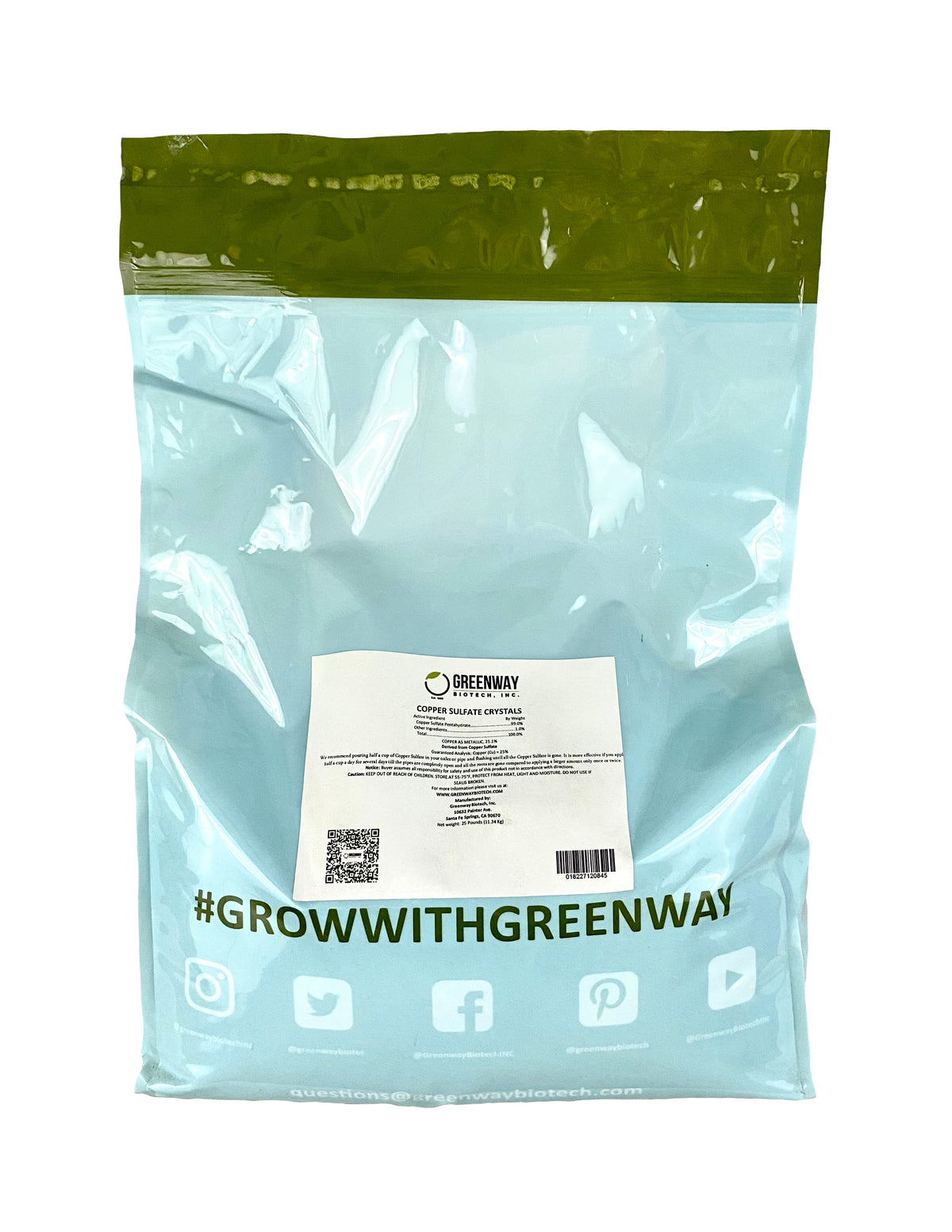
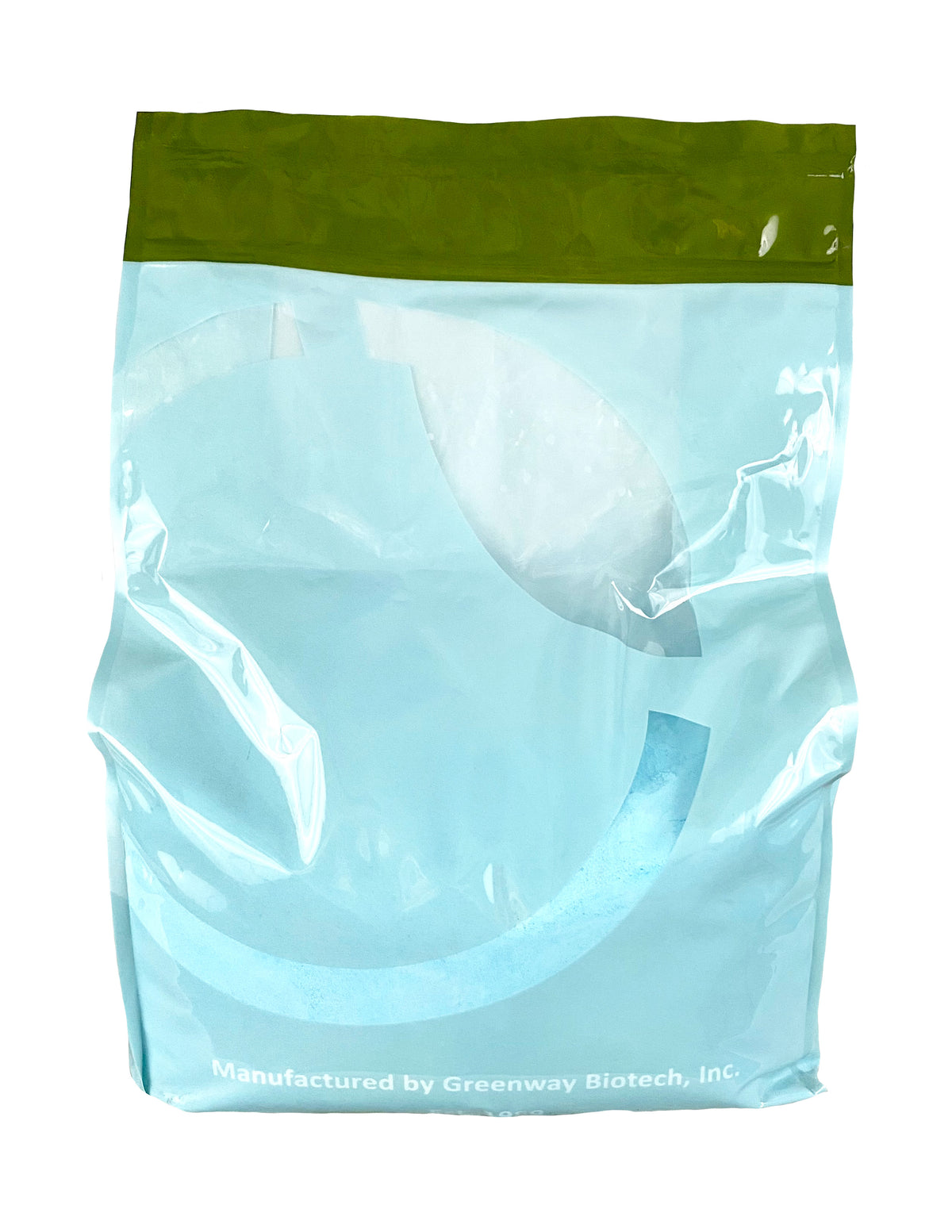
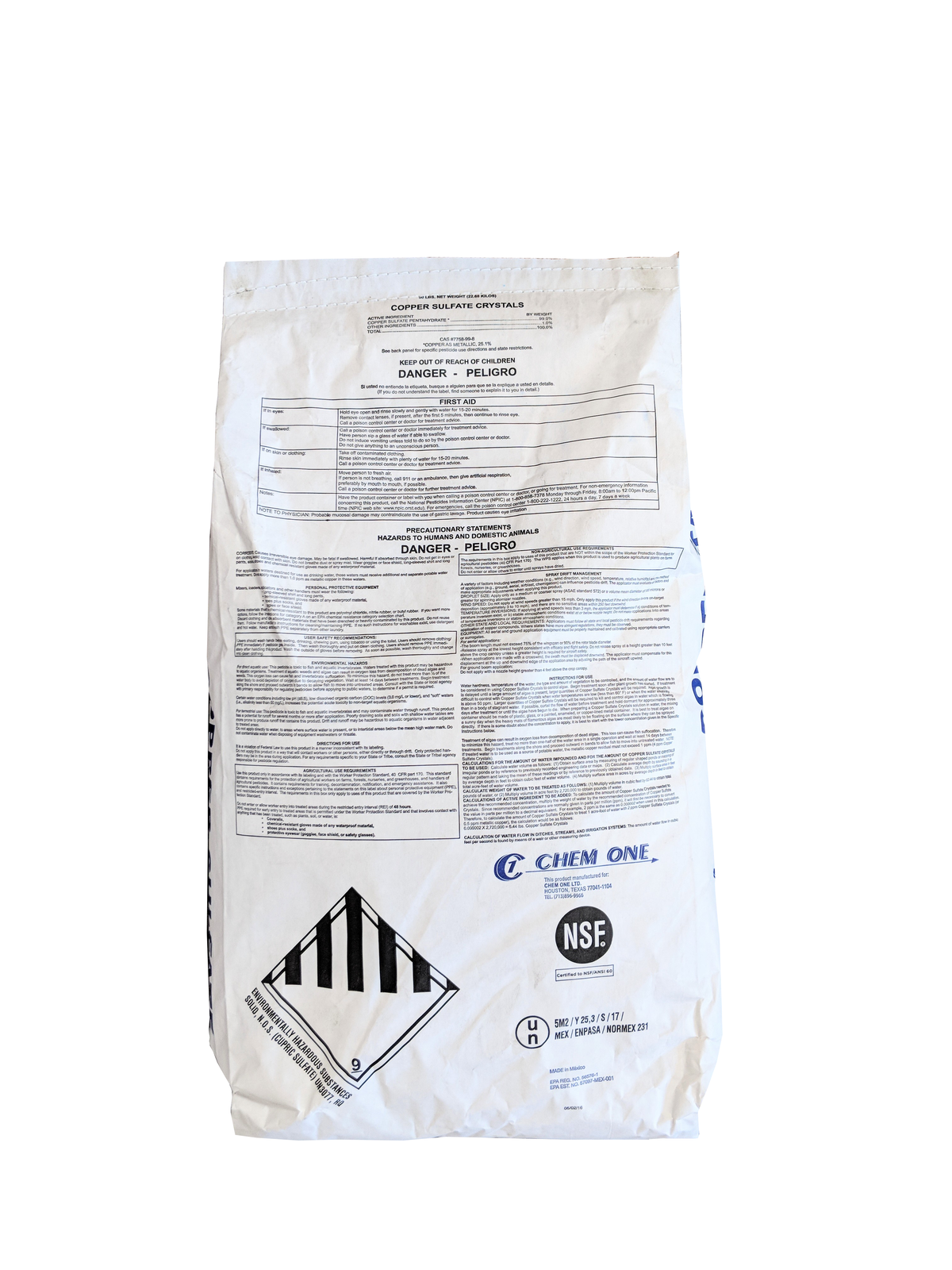
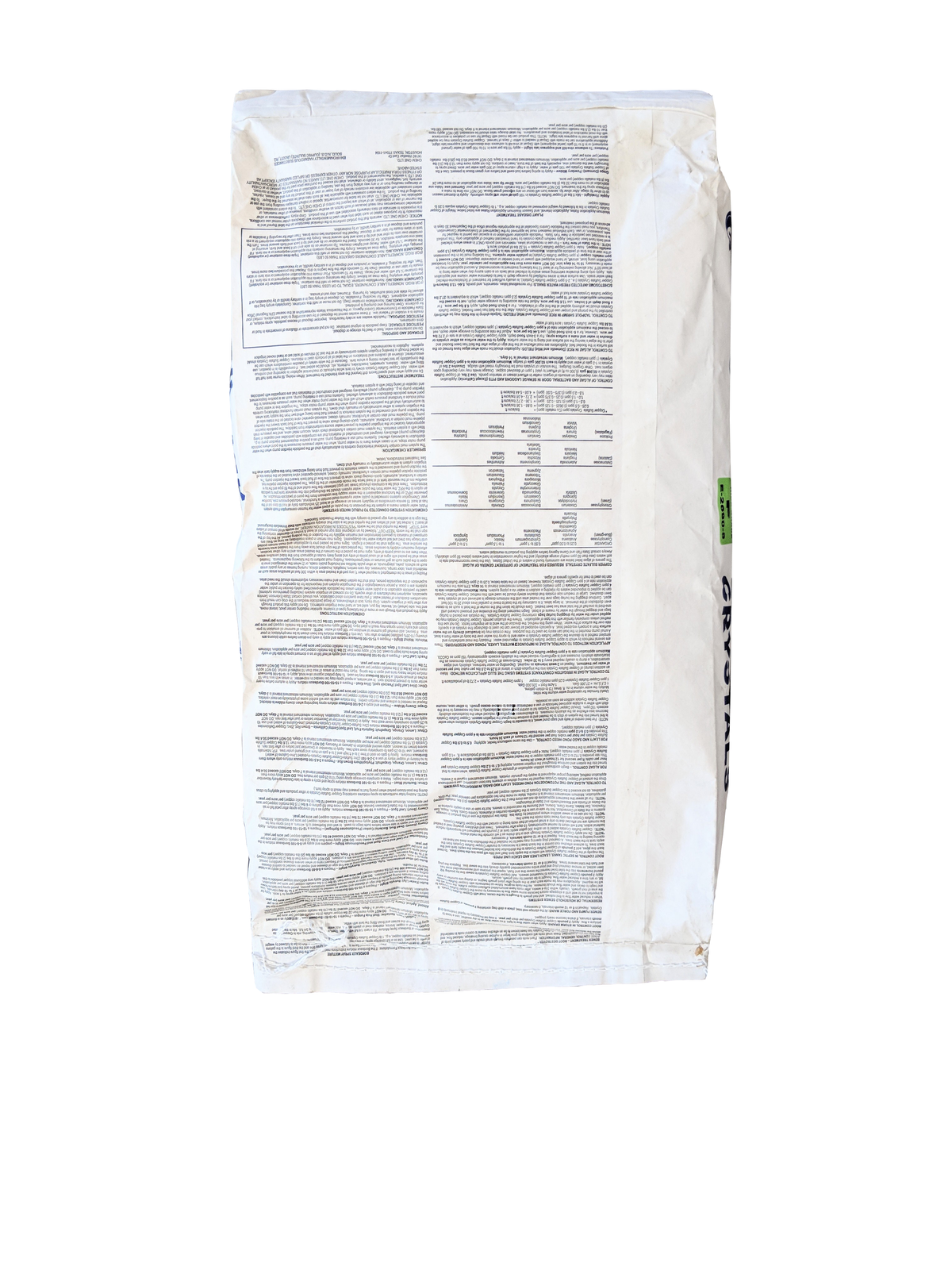
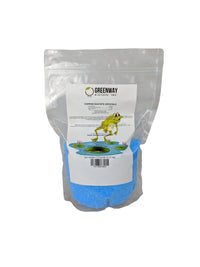
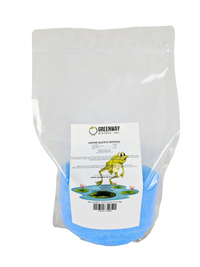
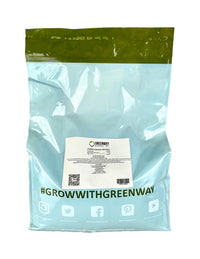
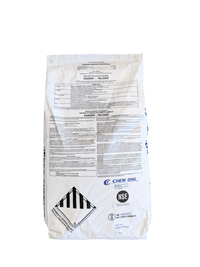
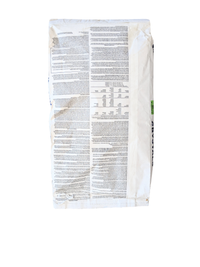
Copper micronutrient fertilizer · 25% Cu · 99% copper sulfate pentahydrate
Copper Sulfate Crystals are copper sulfate pentahydrate (CuSO₄·5H₂O), 99% pure, guaranteeing 25% copper (Cu). Greenway Biotech sells them as a copper fertilizer: a water-soluble source for correcting a copper deficiency confirmed by plant tissue analysis (with a soil test on organic soils), broadcast and worked in before planting or banded at planting.
Copper deficiency is uncommon. University Extension services find it mainly on peat and muck soils and on some sandy soils, in crops such as small grains, onion, lettuce, and carrot. One application lasts for years, and the margin between too little copper and too much is narrow, so test before you buy. It is sold only as a fertilizer and is not registered as a pesticide.
| Specification | Detail |
|---|---|
| Copper (Cu) | 25% |
| Derived from | Copper sulfate pentahydrate (CuSO₄·5H₂O), CAS 7758-99-8 |
| Purity | 99% copper sulfate pentahydrate. Pure copper sulfate pentahydrate is about one-quarter copper by weight, which is why the copper guarantee is 25%. |
| Nitrogen, phosphate, potash | None. This is a copper micronutrient source, not an N–P₂O₅–K₂O fertilizer. |
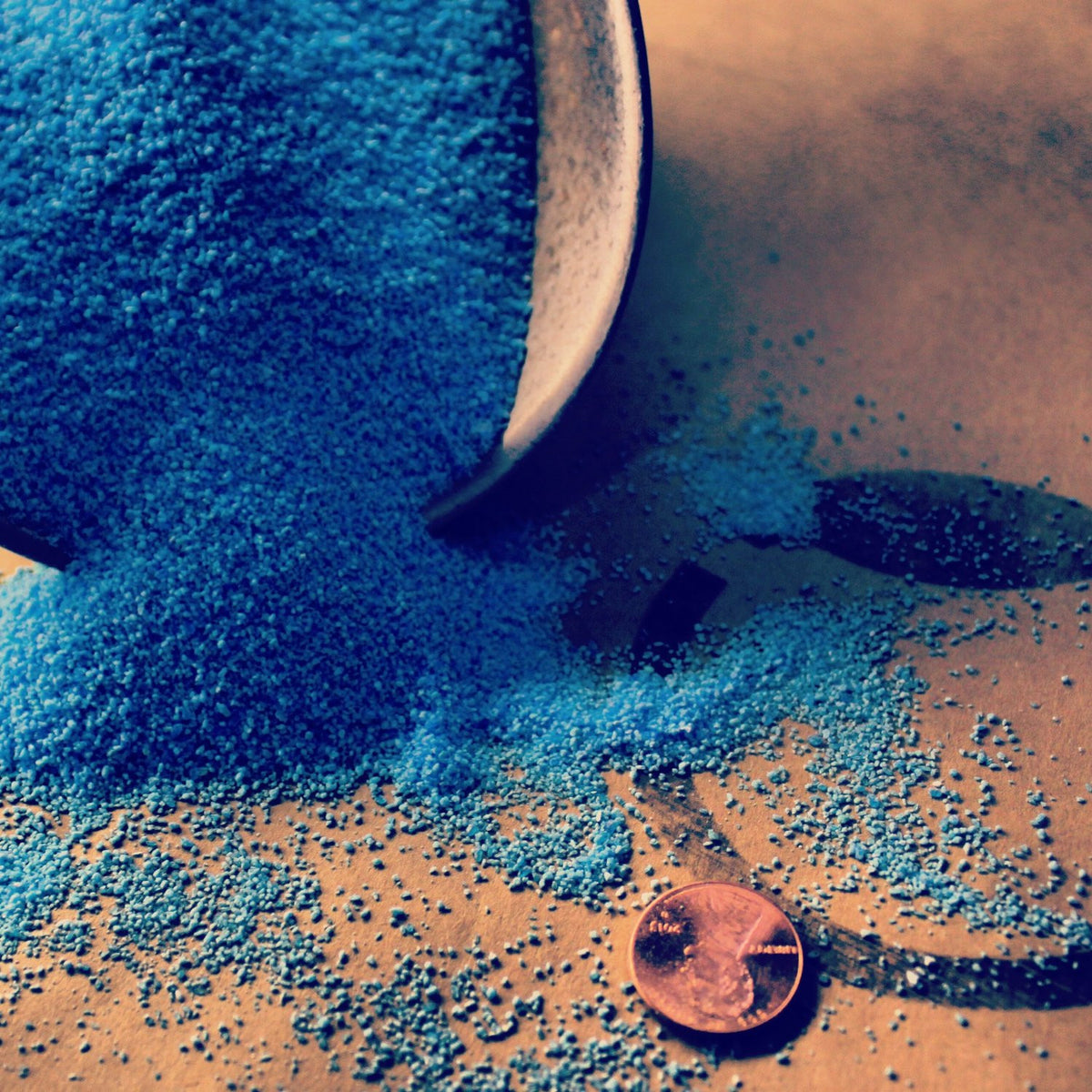
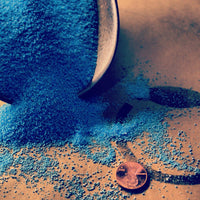
| Physical form | Fine blue crystals that dissolve readily in water |
| Registration status | Sold as a fertilizer. Not registered with the U.S. EPA as a pesticide. |
| Hazards | Corrosive to the eyes and can cause irreversible eye damage. May be fatal if swallowed. Toxic to fish and aquatic life. See Handling, storage & limitations. |
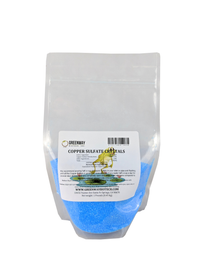
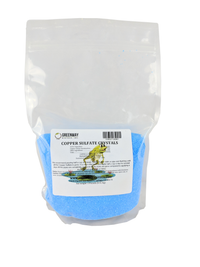
| Package sizes | 1, 2, 3, 5, 10, 25, and 50 lb (the 50 lb size may ship as two 25 lb bags) |
Percentages are by weight of product. One pound of product contains 0.25 lb (113 g) of copper, 1 oz contains 7.1 g, 1 gram contains 250 mg, and a 50 lb bag contains 12.5 lb. University Extension publications state copper rates as pounds of elemental copper per acre; this page multiplies those figures by 4 to give the weight of this product, and shows both.
Choose this product when plant tissue analysis has shown low copper in one of these situations.
University of Minnesota Extension reports that copper deficiencies often occur in peaty, high-organic-matter soils, and that sandy soils are more likely to be deficient than loams and clays. The University of Wisconsin notes that most verified cases in that state involved small grains, lettuce, or onion grown in acid organic soils.
The University of Wisconsin gives its highest copper rates to lettuce, onion, spinach, and tomato, and lower rates to a second group that includes carrot, celery, cauliflower, radish, corn, wheat, barley, oat, and alfalfa. University of Minnesota Extension lists wheat, barley, oats, onions, lettuce, and carrots as crops sensitive to copper deficiency.
University of Minnesota Extension calls copper sulfate the preferred copper fertilizer because of its low cost compared with chelated sources. It can be broadcast or banded with nitrogen, phosphorus, and potassium fertilizers, and Minnesota notes that a water-soluble, fine-particle source improves how efficiently the copper is used.
Not for pesticide or animal use. This product is sold only as a copper fertilizer and is not registered as a pesticide. For algae, plant disease, or roots in pipes, buy a product registered with the EPA and your state for that use and follow its label. It is not labeled for use on or in animals.
Copper rates come from university Extension recommendations for soils where a deficiency has been confirmed. They are stated as pounds of elemental copper per acre; the tables convert them to this product at 25% copper (lb of product = lb of copper × 4) and to garden-scale amounts per 1,000 sq ft. Weigh the product: use a scale reading to 1 g for beds and gardens, and a larger scale for field amounts. If the directions printed on your package differ from this page, contact us before applying.
Confirm the deficiency first. The University of Wisconsin publication these rates come from says: “Do not apply copper unless plant analysis has verified a deficiency.” University of Minnesota Extension recommends soil and plant tissue tests together, and calls soil tests on organic soils the best predictor of the need for copper.
| Crops (as listed by the University of Wisconsin) | Sandy soils | Loams, silts, and clays | Organic soils (peat and muck) |
|---|---|---|---|
| Lettuce, onion, spinach, tomato | 10 lb Cu/acre = 40 lb product/acre; 0.92 lb (417 g) per 1,000 sq ft | 12 lb Cu/acre = 48 lb product/acre; 1.10 lb (500 g) per 1,000 sq ft | 13 lb Cu/acre = 52 lb product/acre; 1.19 lb (541 g) per 1,000 sq ft |
| Alfalfa, barley, canola, carrot, cauliflower, celery, clover, corn, oat, radish, sudangrass, wheat | 4 lb Cu/acre = 16 lb product/acre; 0.37 lb (167 g) per 1,000 sq ft | 8 lb Cu/acre = 32 lb product/acre; 0.73 lb (333 g) per 1,000 sq ft | 12 lb Cu/acre = 48 lb product/acre; 1.10 lb (500 g) per 1,000 sq ft |
| Asparagus, beans, broccoli, cabbage, cucumber, mint, pea, potato, rye, soybean | None recommended | None recommended | None broadcast (see the band rate below) |
| Crops | Sandy soils | Loams, silts, and clays | Organic soils (peat and muck) |
|---|---|---|---|
| Lettuce, onion, spinach, tomato | 2 lb Cu = 8 lb product per acre | 3 lb Cu = 12 lb product per acre | 4 lb Cu = 16 lb product per acre |
| Alfalfa, barley, canola, carrot, cauliflower, celery, clover, corn, oat, radish, sudangrass, wheat | 1 lb Cu = 4 lb product per acre | 2 lb Cu = 8 lb product per acre | 3 lb Cu = 12 lb product per acre |
| Asparagus, beans, broccoli, cabbage, cucumber, mint, pea, potato, rye, soybean | None recommended | None recommended | 2 lb Cu = 8 lb product per acre |
The University of Wisconsin reports that recommended applications are good for 5–8 years, depending on the soil and crop, and advises: “When 30 lb/a of actual copper has been applied, discontinue applications to avoid the development of copper toxicity.” That is a cumulative total, not an application rate: 120 lb of this product per acre, or about 2.75 lb per 1,000 sq ft. University of Minnesota Extension warns that repeated copper applications, sewage sludge, and swine and dairy manure can build toxic copper levels, so count those inputs too. These are Wisconsin recommendations; where your own state Extension service publishes a copper recommendation for your crop and soil, follow it.
No verified copper sulfate rate is given here for foliar sprays, hydroponic or fertigation reservoirs, container plants, individual fruit trees, lawns, or ornamentals, because none of the university sources used on this page gives one. For those uses, see Chelated Copper EDTA 14% Cu, or email questions@greenwaybiotech.com with your plant, test results, and growing method.
Formulas. Product (lb) = university copper rate (lb Cu per acre) × 4 × acres. Square feet ÷ 43,560 = acres. For garden beds, product per 1,000 sq ft (lb) = copper rate (lb Cu per acre) × 0.0918. Multiply pounds by 453.6 for grams.
Worked examples. A 200 sq ft onion bed on sandy soil with a verified deficiency (10 lb Cu per acre): 200 ÷ 43,560 × 40 = 0.18 lb, which is 83 g of product delivering 21 g of copper; a 1 lb bag covers it. A 1,000 sq ft lettuce bed on muck (13 lb Cu per acre): 1.19 lb (541 g) of product; a 2 lb bag covers it. Five acres of wheat on sandy soil (4 lb Cu per acre): 80 lb of product delivering 20 lb of copper.
The calculator below asks what is growing, your soil type, how you will apply it, and the area. It applies the University of Wisconsin rate for that combination, states the copper delivered, and recommends the lowest-price bag combination that covers one application, plus the least-leftover combination when that differs. Prices, tax, and shipping are confirmed at checkout, and availability is confirmed when you add to cart.
The calculator needs JavaScript. If it does not appear, use the formulas and worked examples above to choose a size.
Copper is one of eight essential plant micronutrients. University of Minnesota Extension explains that plants need it for many enzyme activities and for chlorophyll and seed production. Because copper moves little within the plant, deficiency symptoms appear first on younger tissue.
Minnesota explains that soil copper is held by clay minerals and in association with organic matter, and that deficiencies turn up most often in peaty, high-organic-matter soils and in sandy soils. Soils rich in oxides and carbonates tend to have low available copper, and copper-sensitive crops grown on soils at pH 7.5 or above should be monitored. Copper sulfate is water-soluble, which Minnesota notes improves how efficiently applied copper is used, and the copper stays in the soil: a single application can last for many years.
The same persistence is the risk. University of Minnesota Extension warns that there is a narrow range between copper deficiency and toxicity, that repeated applications, sewage sludge, and swine and dairy manure can build toxic levels, and that copper toxicity can persist for an extended period and is difficult to correct. Toxic soil copper reduces seed germination, root development, and plant vigor. This evidence concerns copper nutrition in general; it is not a trial of this finished product.
Match the product to the job. Analyses are each product’s guarantee as shown on its page.
| Option | Copper | Choose it when | Limitation |
|---|---|---|---|
| Copper Sulfate Crystals, this product | 25% Cu as copper sulfate pentahydrate | A soil application to correct a verified copper deficiency, broadcast or banded, where cost per pound of copper matters | Soil application only; no foliar or reservoir rate on this page. Rates are per acre and must be weighed. |
| Chelated Copper EDTA 14% Cu | 14% Cu, EDTA chelated | Foliar sprays, fertigation, hydroponic reservoirs, individual trees, or turf, using the manufacturer’s directions on that page | Less copper per pound and more cost per pound of copper. The University of Wisconsin applies copper chelate at 1/6 of its inorganic copper rates, so rates do not transfer between the two. |
They are copper sulfate pentahydrate, 99% pure, guaranteeing 25% copper (Cu). Greenway Biotech sells them as a copper fertilizer for correcting a copper deficiency confirmed by plant tissue analysis, with a soil test on organic soils, applied to the soil before planting or banded at planting. They are sold only as a fertilizer and are not registered as a pesticide.
No. The 99% is the purity of the copper sulfate pentahydrate. Copper makes up about one-quarter of that compound by weight, so this product guarantees 25% copper: each pound supplies 0.25 lb (113 g) of copper. University copper rates are given as pounds of copper per acre, so multiply them by 4 to get pounds of this product.
Test before you treat. Copper deficiency is uncommon and occurs mainly on peat and muck soils and on some sandy soils. University of Minnesota Extension recommends soil and plant tissue tests together, and the University of Wisconsin says not to apply copper unless plant analysis has verified a deficiency. Symptoms show first on young tissue: in vegetables, young leaves may turn bluish-green before yellowing and the growing point is stunted, and in small grains the leaf tips die back and twist. Those symptoms alone do not confirm copper.
It depends on the crop and the soil. The University of Wisconsin recommends, broadcast, 10, 12, and 13 lb of copper per acre for lettuce, onion, spinach, and tomato on sandy, loam-to-clay, and organic soils, and 4, 8, and 12 lb for crops including carrot, celery, cauliflower, radish, corn, wheat, barley, and oat. In this 25% product that is 40, 48, and 52 lb per acre (0.92, 1.10, and 1.19 lb per 1,000 sq ft) for the first group and 16, 32, and 48 lb per acre (0.37, 0.73, and 1.10 lb per 1,000 sq ft) for the second. Banded at planting, the rates are 4 to 16 lb of this product per acre. It recommends no broadcast copper for beans, peas, potatoes, cabbage, broccoli, cucumber, or asparagus, and only a small banded amount for them on organic soils. Apply only where plant analysis has verified a deficiency, broadcast and work it in before planting, and follow your own state Extension recommendation where one exists.
Once for a confirmed deficiency, then retest before applying again. The University of Wisconsin reports that recommended applications last 5–8 years, and North Dakota State University says a 5 lb per acre copper application lasts many years. The University of Wisconsin advises discontinuing copper once 30 lb of copper per acre has been applied. That is a cumulative total, not an application rate: 120 lb of this product per acre, or about 2.75 lb per 1,000 sq ft. Count past copper sprays and manure as well, because copper toxicity is persistent and difficult to correct.
This page gives no rate for those uses, because none of the university sources it relies on gives a copper sulfate rate for them. Use Chelated Copper EDTA 14% Cu instead: its product page carries the manufacturer’s weighed foliar, fertigation, tree, and turf directions and a reservoir dosing method.
No. Controlling algae, plant disease, or roots is a pesticide use, and this product is sold only as a fertilizer; it is not registered as a pesticide. For those jobs, buy a product registered with the EPA and your state for that use, and follow its label.
No. This product is not OMRI Listed and is not certified for organic production. If you farm under organic certification, get your certifier’s approval for this specific product before using it.
Articles give background. For this product, use the directions and documents on this page.
The soil rates, soil and crop conditions, deficiency and toxicity statements, and copper sources on this page come from the university Extension publications below; the hazard, protective-equipment, and first-aid statements come from the manufacturer’s safety information for this copper sulfate pentahydrate. They are listed for growers, advisors, and certifiers who want to check them. The Extension sources explain copper nutrition; they do not certify or endorse this product.
Rates and sources reviewed September 26, 2026.
Not sure whether copper is the problem, or whether copper sulfate or chelated copper suits your crop? Email your crop, tissue and soil test results, soil type, area, and intended method to questions@greenwaybiotech.com. Or call (562) 351-5168, Monday to Friday, 7 AM to 5 PM Pacific, and we will work through it with you.
Ready to buy? Calculate & choose a bag
Every order carries a 90-day satisfaction guarantee, and we pack and ship from Madera, California. You can also choose a package weight from the size selector at the top of this page.
Greenway Biotech, Inc. is a family-owned fertilizer company based in Madera, California, blending and packaging specialty fertilizers and soil amendments in California since 1989.